

18 Feb 2025 / {Not} Fiction
“Every reader finds himself. The writer’s work is merely a kind of optical instrument that makes it possible for the reader to discern what, without this book, he would perhaps never have seen in himself”
--Marcel Proust, Novelist (1871-1922)
Tall claim; delivered by literary artists of consummate ease, realized by loyal readers. I, mere dabbler, quote Proust only to underline the tremendous power of sight. The greatest thing a human being ever does (and in almost every case, does not do) is to see. To see far, see fully, see clearly is the most essential element of being human. And the most elusive. For one cannot see with eyes alone. What follows, is both scrabble and scrapbook. Both ode and dirge. Populated by friendship/contact. Spurred by share of heart. Some limited to wings of intent, where they still sit aloft. Others in radius of sight, even touch. Several lost in the fleeting blur of life and its compulsions. Without exception, all bound by one denominator: love of my heart. For a man who has lived his life more by the heart and less by the head, that’s saying everything. A cherished gift my non-human friends have given me: instigation to unlearn before learning anew. I now pursue a painfully slow, deep dive course which upon completion, enables the student to discern differences between ‘looking’ and ‘seeing’; ‘hearing’ and ‘listening’; ‘living’ and ‘experiencing’. I discovered a basic curiosity about things natural, fairly early. It has always been a great (and now admittedly greater) sense of enrichment being with non-humans. They inhabit a dimension at once like / unlike us. Henry Beston summed it up quite perfectly in The Outermost House : “…not brethren, not underlings; they are other nations caught with ourselves in the net of life and time”. That’s at once their beauty and their destiny. This piece took root as I watched what erroneously are called “stray” animals; dogs in particular, because they are too ubiquitous and too full of verve to ignore. It helps that I do not like people. The lopsided dictum I live by is simple. I assume the worst of people. And am never disappointed by them. I am, sometimes, pleasantly surprised. Socially destructive thesis, but crafted on merits of experience and self-preservation. Much as I disdain my fellow human beings, I am drawn to nature’s innocents. They have everything against them. Not only are the dice of life loaded, they are cast to pre-determined outcome. Inspite of harsh deals the world metes out to them, they seem to abide by a joie d’ vivre uniquely theirs. For better or for worse, animals seem to meditate on the courageous lines of Dag Hammarskjold: “For all that has been – Thanks. To all that shall be – Yes”. Given a moment, or less, they revel in life. And dogs? Stray dogs? But for some dirty habits (which in the dog world are perfectly fine behaviour) they qualify for a great degree of respect. These professors of friendliness and trust must be consulted for fundraising, persuation, negotiation, loyalty, humour, patience, courage, adventure, discovery, duty, sportsmanship, and environmentally responsible behaviour. A motley collection of beggars who dance better than a ballerina and can put a grand duke to shame with character. Dogs are a never complaining class act. Untrammelled by any sense of order / structure. Rambling rattle, for those ready to trip without maps. “The more I see of men, the more I admire animals” said Madame de Sevigne, the 17th century writer and wit. I am inclined to agree. Zoophilia, as defined by critics, is “loving animals too much”. Originally, however, the word simply meant being an opponent of cruelty towards animals. Is that such a bad thing? Not if it counters Zoophobia, a morbid and irrational fear of animals, or worse, Anthropolatory, which the dictionary defines as “worshipping man”. I revel in Zoophilia rather than joining majority ranks with those for whom the sun emerges each morning from one favoured posterior or the other.
Juxtaposed with specifics, is the overarching, even amorphous consideration: what, if any, is the biological basis of consciousness? Not an answerable question. Some call it a towering problem, others resign to it as insoluble. Who is to say if an animal has consciousness or not? We do not even know if another human being is a conscious, thinking individual. Or for that matter, if we ourselves, are. Ultimately, we do not, and cannot know. According to Donald Griffin, founder of the modern field of Cognitive Ethology (the behavioural study of animal thinking) the belief that humans are the only thinking, feeling, life-form on the planet defies common sense. “ Nature might find it more efficient to endow life-forms with a bit of awareness rather than attempting to hardwire every animal for every conceivable eventuality” says Griffin. Among other contemporaries, Daniel Dennett belongs to a cadre of thinkers who do not hold language as a precondition of consciousness: “The claim, that say, left handed people are unconscious zombies, that many may be dismantled as if they were bicycles, is preposterous. So, at the other extreme, is the claim that bacteria suffer, or that carrots mind being plucked unceremoniously from their earthly homes. Obviously, we can know to a moral certainty (which is all that matters) that some things have minds and other things don’t”.
Animals demonstrate extended consciousness like humans. They reveal awareness of the past and anticipation of future events. Evidence also tells us that they plan. They dream. Recordings from sleeping birds and mammals show patterns of REM (Rapid Eye Movement, which occurs in deep sleep) similar to those of humans. When your own feelings and motivations are a reference point for another person’s feelings, we call it empathy. Use yourself to infer the behaviour of an animal and people say it is anthropomorphism!! Cloaked in the guise of scientific respectability, anthropomorphism comes to pass when it should not. Such self-evident emotions as pleasure are labelled “rewarding stimuli” ; kissing as “beak rubbing” ; open mouthed kissing as “false feeding”.….Do animals have souls ? No one can prove / disprove this any more than in the case of humans. “In a wonderful and inexpressible way God is created in his creatures” wrote the early medieval theologian, Scotus Erigena. Every old culture from the Americas to Africa to Asia has held that animals are brethren. Fellow beings at once sentient, cognitive, intelligent, although differently enabled. Their capacity for language may not be articulated in word or phrase; it waxes eloquent for those who listen. It is coherent in expression and conveyance. I consider them as mysterious, wise expressions of the mind-at-large which pervades the universe. “The soul” said the psychoanalyst Carl Jung, “lies partly in eternity and partly in time”. As clear a resonance as can be.
In December of 1963, a zoologist, Adriaan Kortland witnessed this: “Sunset in an African rainforest. The splendour of these sunsets. A chimpanzee arrives on the scene, carrying a papaya, holding it with one hand against his loins as he walks along. This is his bedside snack. The chimp puts down the papaya. For a full fifteen minutes the animal remains as if spellbound by the spectacle of the changing colours of the dusk, and watches without moving. Then he withdraws silently into the thicket, forgetting his papaya”.
What was going on in the ape’s mind? What aesthetic overwhelming impulse made him stand and gaze at the setting orb so long and so intently as to forget his snack? How many humans are capable of such immersion as to forget a precious possession? Was he imagining? Remembering other sunsets/sunrises/ companions? No one can tell. The fact that this incident has been quoted here as well as in several other places, illustrates the fact that we humans have been impressed by it. Impressed enough to pause, recount and reflect on this departure from the hubris of being unique. Perhaps more than anything else, it shows how much we, mere neophytes, know of the otherness of the Other. The word “animal” comes from a Latin root that means “soul” To ancient thinkers soul was the mysterious force that gave life and breath to the myriad of earth’s creatures. The world mind, or the world soul was the Animus Mundi; it enlivened entire nature. Later theologians restricted soul only to humans. What is soul / spirit? A channel, if you will, through which we become conscious of the essence – the inward beauty— that dwells within another living being. To the completely obtuse and obstinate, I offer what biologist E.O. Wilson calls biophilia (love of life). The idea is central. Germane to all existence; from microbe to man. Everyone, everything, everywhere, every time chases pleasure. Different garbs, alternating routes. Dubious success. Impermanent outcomes.
Konrad Lorenz was an Austrian who shared a Nobel for his contributions to ethnology. He is widely recognized for introducing the modern scientific view that animals are not unconscious, unthinking, only responding to external stimuli, automatons. At last science grudgingly, reluctantly, is beginning to see animals as cognitive sentient beings capable of as much pleasure / pain as humans. But you do not need opinion, science, research to tell you the truth. You only have to open your mind, interact with an animal to see the being within that different body. To those who argue on the side of intelligence, how fair is mental dominion? Jeffrey Masson and Susan McCarthy, authors of the acclaimed ‘When Elephants Weep’ do not think so: “Intelligence does not imply worthiness; …it should not matter, from an ethical perspective, how intelligent a particular species or even any other particular individual is – after all, we don’t shoot a human being who is not doing as well as his contemporaries at school”. The patronizing tendency to measure the intelligence of other animals in human terms is misplaced. Completely. And who, past or present, can define the nature of reality? We have not even begun to cogently interpret our own selves.
“You have just dined, and however scrupulously the slaughterhouse is concealed in the graceful distance of miles, there is complicity”
-- Ralph Waldo Emerson
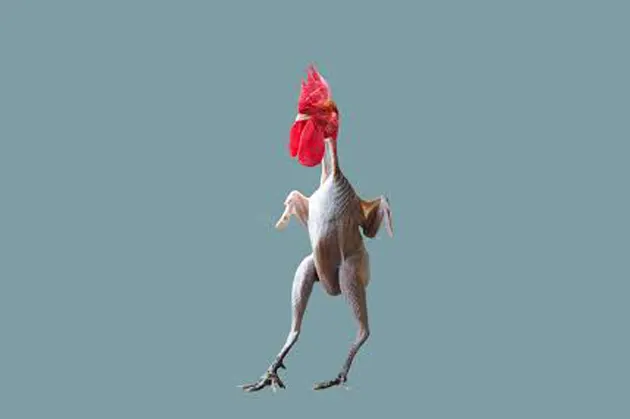
To Emerson’s point (and beyond), Jonathan Balcombe adds very poignant fact: “No bird is more maligned by humans than the domesticated chicken, Gallus gallus. It is not enough for us to subject tens of billions of chickens each year to factory farms and slaughterhouses, We deepen the injustice by denigrating them at every turn. A coward is said to be a ‘chicken’. Chickens and turkeys have also become emblematic for stupidity…A closer look at these birds reveals that the stupidity lies not with them but with us. Despite their brainless reputation, chickens have 25 to 30 different call types (at least that’s how many humans can distinguish – the birds probably recognize many more). Chickens also have the brains for deception…”
It has been proven that chickens don’t just live in the present; they anticipate the future and demonstrate self-control. Studies have also found that neuron organization in chicken brains is highly structured. This suggests that they have an impressive level of intelligence. Unlike humans, the chicken brain has a remarkable capacity to repair itself, fully, after trauma. This has neuroscientists completely foxed. The beauty of Gallus gallus domesticus is replete with several more examples and merits more than this passing mention.
I drew in the bird to illustrate that we blank out the inconvenient, regardless of how strongly or persistently it shines in our face. The human capacity for self-deception is unfathomable. The ostrich should cede the ‘head in sand’ trait to humans. The ‘moral’ animal’s habit of sub-serving truth to convenience or temptation is manifest in the extreme. Eventually, we believe what we want to believe. Nothing to do with fact or fiction. The propensity of people to cocoon themselves in chimeras is unbelievable in the extent of ethical transgression and intellectual dishonesty. Wilfull ignorance is akin to complicity. If a modern pig farmer never thinks of the pig as an animal with a nature, with needs of its own, with the intelligence of a regular four year old child, it may be due less to lack of compassion than lack of thought. Whatever be the reason, the fact is that trees are missed for the forest as surely as the forest for the trees. Thomas Hardy noted the accusatory gaze of a pig which was horribly killed (as all pigs are):
“The dying animal’s cry assumed its third and final tone, the shriek of agony; his glazing eyes riveting themselves on Arabella with the eloquently keen reproach of a creature recognizing at last the treachery of those who had seemed his only friends”. (Jude the Obscure)
Increasingly, irrefutable evidence points at what those who have the gift of sight have always known: Animals, very obviously, are individuals with as much biography as biology. And like us, very clear followers of the pursuit of pleasure. It is a commonsensical observation; but commonsense, as George Bernard Shaw reminded us “is genius”. And therefore, scarce.
Humans who enslave, castrate, experiment on and fillet other animals have an understandable penchant for pretending animals do not feel pain. A sharp distinction between humans and ‘animals is essential if we are to bend them to our will, wear them, eat them without any disquieting tinges of guilt or regret. It is unseemly of us, who often behave so unfeelingly towards other animals, to contend that only humans can suffer. The behaviour of other animals renders such pretensions specious. They are just too much like us. In the annals of primate ethics, there are some accounts that have the ring of parable. In a laboratory setting, macaques were fed if they were willing to pull a chain and electrically shock an unrelated macaque whose agony was in plain view through a one-way mirror. Otherwise, they starved. After learning the ropes, the monkeys frequently refused to pull the chain; in one experiment, only 13% would do so; 87% preferred to go hungry. One macaque went hungry for two weeks rather than hurt its fellow. Macaques, who themselves had been shocked in previous experiments were even less willing to pull the chain. The relative social status or gender of the macaques had little bearing on their reluctance to hurt others.
“If asked to choose between human experimenters offering macaques this Faustian bargain and the macaques themselves – suffering from real hunger rather than causing pain to others – our own moral sympathies do not lie with the scientists. But their experiments help us to glimpse in non- humans a saintly willingness to make sacrifices in order to save others – even those who are not close kin. By conventional human standards, these macaques, who have never gone to school, never heard religion or its gods, never squirmed through a single high school civics lesson – seem exemplary in their moral grounding and their courageous resistance to evil. Among these macaques, at least in this case, heroism is the norm. If the circumstances were reversed, and captive humans were offered the same deal by macaque scientists, would we do as well? (Especially when there is an authority figure urging us to administer the electric shocks, we humans are disturbingly willing to cause pain and for a reward much more paltry than food is for a starving macaque…). In human history, there are a precious few whose memory we revere because they knowingly sacrificed themselves for others. For each of them, there are multitudes who did nothing.”
Clearly, what is disturbing is the cocksureness of people even in the face of contending logic. It stems from several ills, chief among which are impoverished minds, sub-zero integrity and missing souls. Wholly or in part, with rich or sparse frequency, we are guilty without exception.
“(That) the sun is the centre of the world and completely immovable of local motion is foolish and absurd in philosophy, and formally heretical, in as much as it expressly contradicts the doctrine of the Holy Scripture in many passages, both in their literal meaning and according to the interpretation of the Fathers and the Doctors”.
--Declaration of the Committee of the Holy Office, 19th February, 1616.
Incidentally, this vexing subject of a spinning earth was first floated two hundred years before Christ. The proponent was one Aristarchus of Samos (the place corresponding to ancient Troy/Asia Minor. Present day Turkie). Scholars of the day had put forth several arguments against it. Logical ones. If the earth spun, they said, people would be flung off the surface. Birds would have to beat their wings at speeds hundreds of miles an hour just to stay aloft at one spot. A spinning earth appeared like an impossible scenario and “common sense” of the day prevailed in not uncommon cocky ignorance. In the case of the eminent fathers and the distinguished doctors, they were refuting the assertion that the earth went around the sun. They held it true vice versa. And the world, as it always does, was content to nod away. That says pretty much everything. Resistance to commonsense, refutation of the new, denial of the inconvenient. A long litany of debunking the nature of reality. So be it. Does not matter; not in summation. Because if the universe is intelligent and compassionate, if every equation must be balanced beyond the sums of math and chemistry, if “every action has an equal and opposite reaction” screams of torture and sufferings of innocents surely have inverse resonance. To each, must be, their own. Sadly, for most, a moral schizophrenia and cognitive confusion at best. I prefer not to dwell on the worst. Nothing can be foisted. My toast is to the nonhuman beings. As is also my last bet.
“I am my brother’s keeper and I will fight his fight and speak the word for beast and bird till the world shall set things right.” – Rita Wheeler Wilcox
“God moves in a mysterious way His wonders to perform; He plants his footsteps in the sea, And rides upon the storm…”
Olney Hymns (1779); William Cowper

1 13
10 5
11 4
14 1
16 1
18 1
19 1
2 3
22 1
25 1
3 2
4 2
40 1
5 3
500A Z 1
6 3
8 1
9 1
blog 20
casino 92
Casino Bonukset Ilman Talletusta 1
Cazeus 1
cwexpo 1
Finance/Hobbies/Technology/Utilities/Education/Media 1
GAMBLING 648
gambling/education/sport/other 2
Game 68
Games 9
Giochi 11
goifetch 1
Ilmaiskierrokset Ilman Talletusta 1
Ilmaiskierroksia Ilman Kierrätystä 2
Ilmaiskierroksia Ilman Kierrätysvaatimusta 3
Jokabet 1
Kasino Bonus Ilman Talletusta 1
Kasinot Ilman Kierrätysvaatimusta 1
KZ 12633 2
Legiano 1
Lifestyle, Business & Culture 2
Lolajack 1
Mafia Casino 25
Mr Luck 1
Naobet 1
Nettikasino Paras Palautusprosentti 1
Nine Win 3
Nyxbets 1
Our Partners - best-online-casinos-ie.rogueaba.com 1
Paras Nettikasino Ilman Rekisteröitymistä 1
Pikakasinot Ilman Rekisteröitymistä 1
Pin Up 1
Post 198
public 1082
Rekisteröimättömät Nettikasinot 2
Spiele 7
Spins 1
Suomalaiset Nettikasinot Ilman Rekisteröitymistä 1
Tech 2
Uncategorised 146715
Uudet Suomalaiset Nettikasinot 1
Uudet Verovapaat Nettikasinot 2
Velobet 1
Verovapaat Kasinot Suomalaisille 1
Westace 2
Winbeast 1
Winnita 1
Winplace 1
Στοίχημα 1
Блог 91
Казино 7

The Nudist
26 Jun 2025 / {Not} Fiction
Incidents defy probability. I know this sounds a little far-fetched, but incidents do defy probability; they actually do...
More
Duped by Deuce
18 Feb 2025 / {Not} Fiction
Any picture has to be displayed at eye level. And you must then, learn to appreciate a picture. See the frame, its contours first...
More
Grandfather’s Monocle On A Gimlet Eye
10 Jan 2025 / {Not} Fiction
I actually met him. Briefly, in brush past and cursory glance as I rushed to board the train to...
More
The name Far Afield, this website, creative expressions, content and all related aspects direct or indirect are the sole and exclusive property of Tigermoth Mindscapes and protected as such under law.
Designed & Developed by Quintero Solutions